Pilot Initiative Shows Strong Early Outcomes — Helping Residents Avoid Eviction and Achieve Housing Stability
BOSTON, Jan. 6, 2026 — Connected Communities today announced early results from its Coordinated Eviction Prevention (CEP) program, operated with grant funding from Massachusetts General Hospital in partnership with WinnCompanies, Urban Edge, Madison Park Development Corporation, Nuestra Comunidad Development Corporation, Dorchester Bay Economic Development Corporation and Codman Square Neighborhood Development Corporation.
The CEP program provides a lifeline to residents at risk of eviction due to unpaid rent. Participating residents agree to repay an affordable portion of their delinquent rent over six months while engaging in financial coaching, connecting with community resources and coming into compliance with other lease requirements. Upon successful completion of the program, the remaining balance is forgiven through a combination of grant funding and debt write-off.
Since the program launched in February 2025, 45 residents, representing a 73% completion rate, have successfully completed the six-month program as of the end of this past October. These residents earned forgiveness of nearly $200,000 in delinquent rent, approximately four times their combined tenant (unsubsidized) portion of monthly rent. The program helped participants resolve rent-arrears, strengthen financial habits and remain housed.
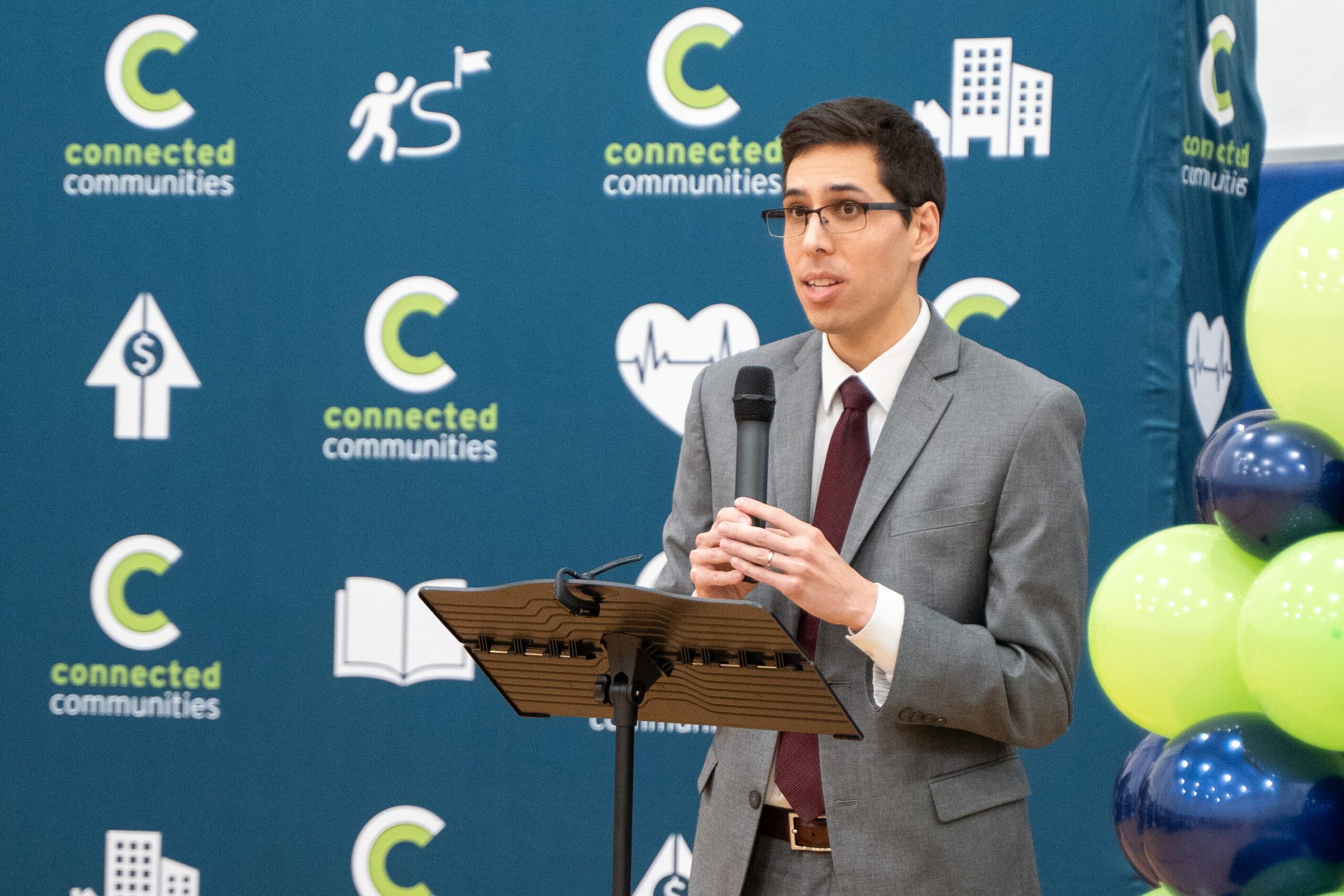
“The CEP program is designed to strengthen communication and accountability between residents and property management over a six-month period, combining repayment, coaching and debt forgiveness,” said Edward Chien, director of economic mobility for Connected Communities.
The Cost of Eviction
Eviction destabilizes families, limits access to future housing assistance and places added strain on landlords, courts, employers and social services. The total social cost of an eviction has been estimated at $10,000 or more.
Based on that estimate, the 45 households served by the CEP program through October represent an estimated $450,000 in avoided social costs. With approximately $200,000 invested in debt forgiveness, the program has generated an estimated return on investment of 125%.
“Every family completing the program is an eviction prevented,” said Mai Dang, president of Connected Communities. “Families complete the program with a zero-rent balance, greater financial skills, and a clearer path forward.”
CDC Partnership
Connected Communities works in close partnership with a consortium of community development corporations (CDCs) participating in the program. Urban Edge serves as the lead grantee and direct recipient of the Massachusetts General Hospital funding and oversees the program, while Connected Communities is contracted to manage day-to-day operations across the participating CDC portfolios.
“Every eviction avoided is both a financial and human win,” said Urban Edge CEO Emilio Dorcely. “The Coordinated Eviction Prevention Program provides a pathway to stability that keeps residents in their homes and preserves the strength of our neighborhoods. The impact is amplified by our consortium of CDCs, all deeply rooted in the communities they serve.”
Looking Ahead
The CEP program will continue into 2026, with a goal of serving approximately 300 households, eliminating $1 million in delinquent rent and reducing evictions by 50%. Connected Communities is seeking additional funding to continue the program and support expansion.
“This program exemplifies the important work of Connected Communities,” said Mai Dang. “By bringing together property owners, property operators and funders to implement social impact projects and shared funding, we create solutions that deliver measurable results for residents in the community, while strengthening property assets.”
“Philanthropic support is essential to sustaining programs like CEP,” Edward Chien added. “These contributions allow us to expand services, support more residents at risk of eviction, and generate measurable outcomes that benefit both families and the communities they live in.”
About Connected Communities Foundation
The Connected Communities Foundation is a private, nonprofit organization that helps owners of multifamily properties develop and implement collaborative strategies with measurable, positive impacts for residents of low-income and affordable housing. One of the nation’s largest providers of housing-based supportive services, the foundation uses a collective-impact approach focused on six outcome areas: community engagement, economic mobility, education, employment, health and housing. Learn more at connectedcommunities.org.
How to Support
Individuals and organizations interested in supporting Connected Communities Foundation programs, including the Coordinated Eviction Prevention initiative, can visit connectedcommunities.org for more information.
Media Contact
Ed Cafasso
edcafasso@gmail.com
Call or text: 617-455-9651
